Is your Barrington medical practice fully compliant with cleaning standards to prevent healthcare-associated infections (HAIs)?
Yes, maintaining strict cleaning protocols is crucial, especially for outpatient clinics. The CDC reports that 1 in 31 hospital patients has at least one HAI on any given day. While hospitals bear the most cases, outpatient medical offices are not exempt from outbreaks if proper cleaning practices aren’t followed.
In the Barrington area, the risk of infection spread is real, but Evergreen Cleaning Group is here to help. With X years of experience, we specialize in ensuring local medical practices meet CDC guidelines and Illinois Department of Public Health (IDPH) standards. Our expertise guarantees your facility remains safe, compliant, and ready to prevent infections, improving both patient safety and your clinic’s reputation.
Here’s what this guide will help you understand:
- Implement strict cleaning protocols to prevent healthcare-associated infections (HAIs)
- Understand CDC guidelines for environmental cleaning in outpatient settings
- Follow best practices for high-touch surface cleaning and terminal cleaning
- Choose the right EPA-registered disinfectants for your clinic
- Implement cross-contamination prevention measures effectively
Why Do Medical Practices in Barrington Need Strict Cleaning Standards?
Infection prevention should be a top priority for every medical practice, especially in Barrington, where the risk of healthcare-associated infections (HAIs) can affect not only patients but also your business’s reputation and bottom line. According to the CDC, there were an estimated 687,000 HAIs in U.S. hospitals in 2015, with 72,000 deaths. While hospitals face the bulk of these cases, outpatient clinics are also at risk, with studies showing up to 8.2% of infections occurring in non-hospital settings.
Neglecting cleaning protocols can lead to serious consequences, including prolonged patient recovery times, outbreaks, and damage to your clinic’s reputation. On the other hand, compliant cleaning practices can help reduce infection risks significantly and protect both patients and staff.
For example, one of our clients in Barrington saw a 40% reduction in patient complaints after we revised their cleaning protocols, ensuring they adhered to CDC guidelines. This not only improved patient safety but also enhanced their overall patient satisfaction.
What Do CDC Guidelines Actually Require for Environmental Cleaning in Clinics?
The CDC’s environmental cleaning guidelines set the standard for infection control in medical facilities. However, they are typically more focused on hospital settings. For outpatient clinics, like those in Barrington, the guidelines need to be adapted to fit the specific needs of a lower-risk environment, though infection control still remains essential.
CDC cleaning guidelines recommend a two-step process: clean first to remove dirt and organic matter, followed by disinfection to kill any remaining pathogens. For high-touch areas, such as exam rooms and waiting areas, the CDC suggests cleaning and disinfecting at least twice daily, with additional disinfection between patient visits in high-traffic areas.
Our medical cleaning programs adapt these guidelines to fit local outpatient needs.
The Clean → Disinfect Sequence Explained
Following the clean-then-disinfect sequence is vital in medical practices. The first step is to clean surfaces using a microfiber cloth or appropriate cleaning tool to remove dirt and organic matter. After cleaning, disinfection is essential to kill any remaining bacteria, viruses, or pathogens.
The CDC recommends that disinfectants be allowed to remain on surfaces for a contact time of 5-10 minutes. Rushed cleaning or insufficient dwell time reduces the disinfectant’s effectiveness and allows harmful pathogens to remain on surfaces.
For instance, if an exam table is wiped down without sufficient dwell time, you’re not truly disinfecting it; you’re just spreading germs around. However, if you follow the proper cleaning and disinfection process, you can eliminate 99% of bacteria, ensuring the safety of your next patient.
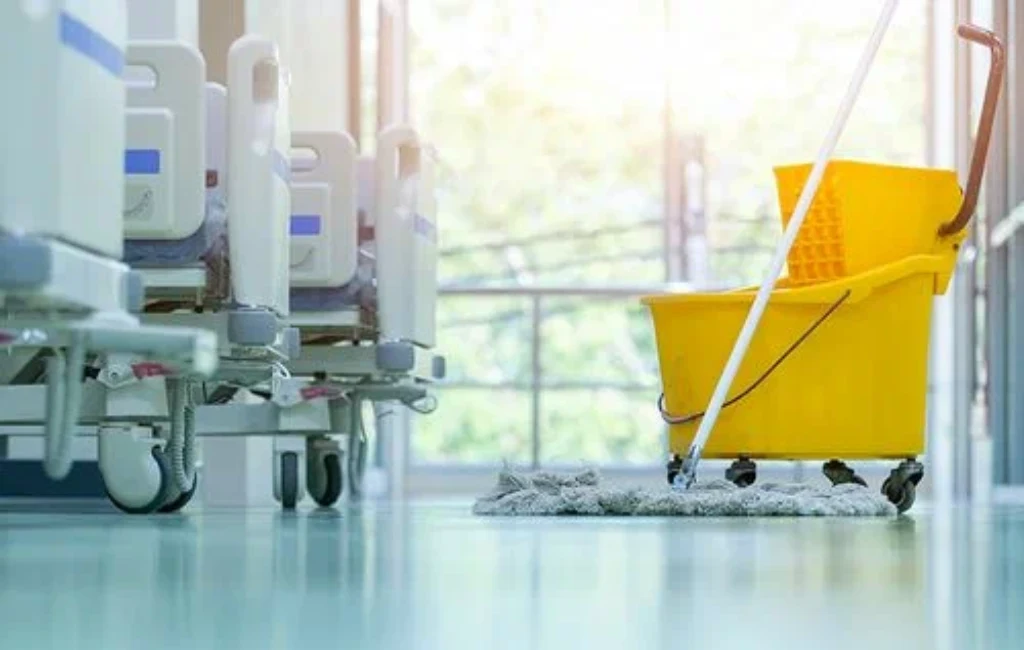
How Often Should High-Touch Surfaces Be Disinected in a Barrington Medical Office?
In a Barrington medical office, high-touch surfaces like doorknobs, exam tables, reception desks, and bathroom fixtures must be cleaned regularly to prevent the spread of pathogens.
According to CDC guidelines, these areas should be disinfected at least twice daily. However, in exam rooms, disinfection should occur between each patient visit to reduce cross-contamination. For location-specific support, see our coverage in nearby areas like commercial cleaning services in Northbrook IL.
Here’s a breakdown of high-touch surfaces in a medical office and their recommended cleaning frequency:
| Area | Recommended Frequency |
| Exam Tables | Between patients |
| Doorknobs/Light Switches | At least 2x daily |
| Reception Desk | 2x daily + as soiled |
| Bathroom Fixtures | 2x daily |
| Waiting Areas | Daily + spot cleaning |
By following these guidelines, you’ll ensure that your medical practice is doing everything it can to prevent healthcare-associated infections (HAIs).
What Is Terminal Cleaning and When Do Barrington Clinics Actually Need It?
Terminal cleaning refers to a thorough cleaning process that takes place after a patient is discharged or after a procedure. It involves a deep clean of patient-contact areas to ensure that any pathogens left behind are properly disinfected. Outpatient clinics in Barrington should use terminal cleaning in the following situations:
- After treating patients with contagious diseases.
- Following high-risk procedures.
- After the isolation room use.
The CDC recommends terminal cleaning for high-risk rooms like operating rooms or ICUs, but it’s just as important for outpatient settings after certain procedures. Studies show that terminal cleaning in clinics can reduce HAIs by up to 50%.
For more information on terminal cleaning procedures, check the CDC’s environmental cleaning guidelines here.
Step-by-Step Terminal Cleaning Process for Outpatient Settings
Terminal cleaning in outpatient settings is crucial for eliminating pathogens after high-risk procedures or patient isolation. The CDC’s step-by-step process outlines how to approach this with care and efficiency. Here’s an actionable sequence:
- Wear PPE: Don gloves, gown, mask, and eye protection.
- Remove all visible debris: Use a microfiber cloth to wipe down surfaces.
- Disinfect surfaces: Apply an EPA-registered disinfectant to all patient-contact areas.
- Focus on high-touch areas: Clean door handles, exam tables, sinks, and countertops.
- Allow sufficient contact time: Let the disinfectant sit for 5-10 minutes as per the product guidelines.
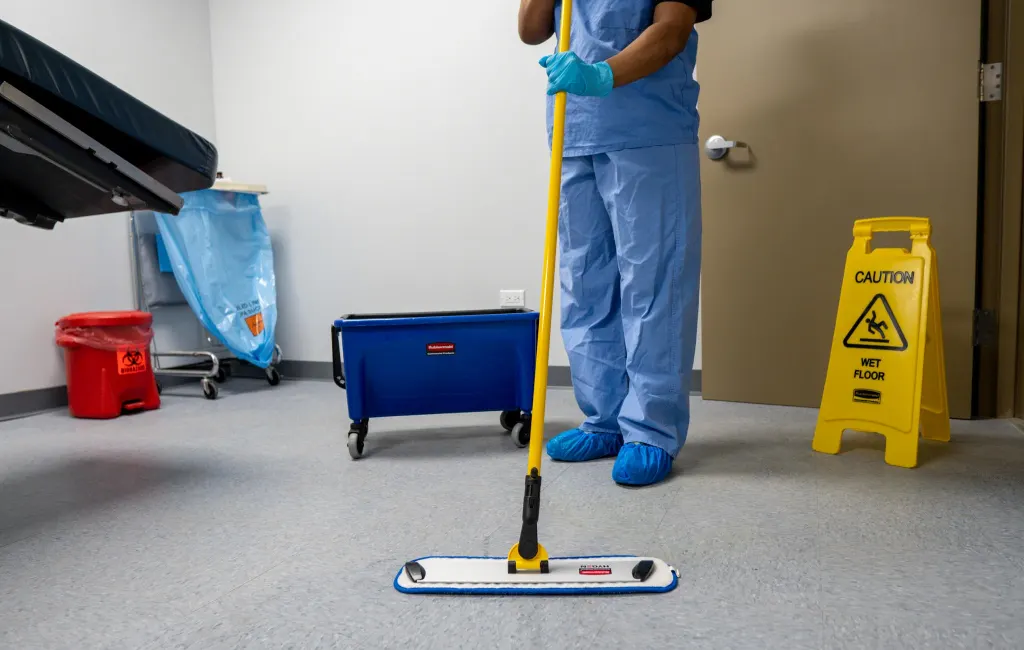
- Clean floors: Use a hospital-grade floor cleaner and disinfectant.
- Dispose of waste: Use biohazard disposal procedures for any contaminated waste.
A good practice is to follow the CDC’s checklist to ensure no area is overlooked. Incomplete terminal cleaning leads to persistent pathogens, which could trigger infections.
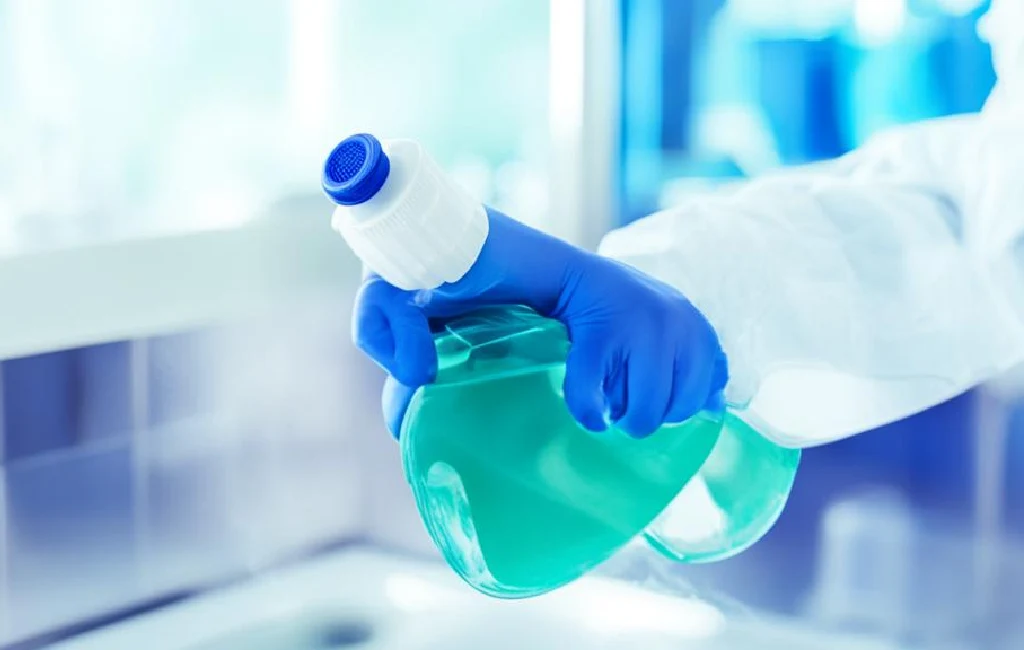
Which EPA-Registered Disinfectants Are Right for Your Medical Practice?
Choosing the right EPA-registered disinfectants is essential for ensuring effective infection control in your Barrington medical office. The EPA List N provides a catalog of disinfectants that are proven to be effective against pathogens such as viruses, bacteria, and fungi.
Here are some popular disinfectant categories:
- Quaternary Ammonium Compounds (Quats): Broad-spectrum, effective against most pathogens.
- Hypochlorites (Bleach): Cost-effective but may be corrosive.
- Hydrogen Peroxide: Non-toxic and effective, with less irritation.
For electrostatic spraying applications, HEPA filters can also be a good tool for ensuring that air quality remains safe after cleaning. Eco-friendly options, such as DfE-certified disinfectants, are available for those concerned with safety and environmental impact.
Refer to the EPA Govt List N for specific products and ensure that your practice uses the right hospital-grade disinfectant.
How Can Medical Practices Prevent Cross-Contamination Between Patients?
Preventing cross-contamination in a medical office is essential for reducing the spread of infections like HAIs. CDC guidelines suggest several methods, such as:
- Zoning: Divide the clinic into clean and dirty zones.
- Tool segregation: Use color-coded microfiber cloths for different areas (e.g., blue for exam rooms, green for reception).
- Proper PPE: Ensure that gloves, gowns, and masks are used when cleaning high-risk areas.
In fact, proper use of PPE and microfiber cloths can reduce cross-contamination by up to 30%, according to WHO data.
Area-Specific Cleaning Protocols Every Barrington Clinic Should Follow
Each area within a medical clinic has its own set of cleaning needs based on traffic, patient contact, and infection risk. The CDC provides guidelines on how frequently specific areas should be disinfected:
| Area | Frequency |
| Waiting Areas | Daily |
| Restrooms | Twice daily |
| Exam Rooms | Between patients |
| Reception Area | Daily |
| Hallways | Daily |
This schedule helps ensure that the high-touch areas are regularly disinfected to reduce the risk of infections.
Additionally, local standards, such as those enforced by the Illinois Department of Public Health (IDPH), align with these federal recommendations, ensuring that Barrington clinics maintain the highest cleaning standards.
How Do You Know Your Cleaning Service Follows Proper Healthcare Standards?
To ensure your cleaning service is following CDC-aligned procedures, you should ask for proof of regular audits and checklists. Evergreen Cleaning Group ensures full regulatory compliance with the following steps:
- Audit Frequency: Regular audits help reduce HAIs by up to 20%, according to CDC reports.
- Use of Checklists: These ensure that no surface or area is overlooked during cleaning.
- Cleaning Logs: Make sure your service provider keeps detailed records of each cleaning session, which can be reviewed during audits.
You can also use CDC checklists to verify that your provider is following the correct procedures.If you’re unsure whether your cleaning service follows the proper standards, partner with a compliant provider like Evergreen Cleaning Group to ensure your clinic is both clean and compliant.
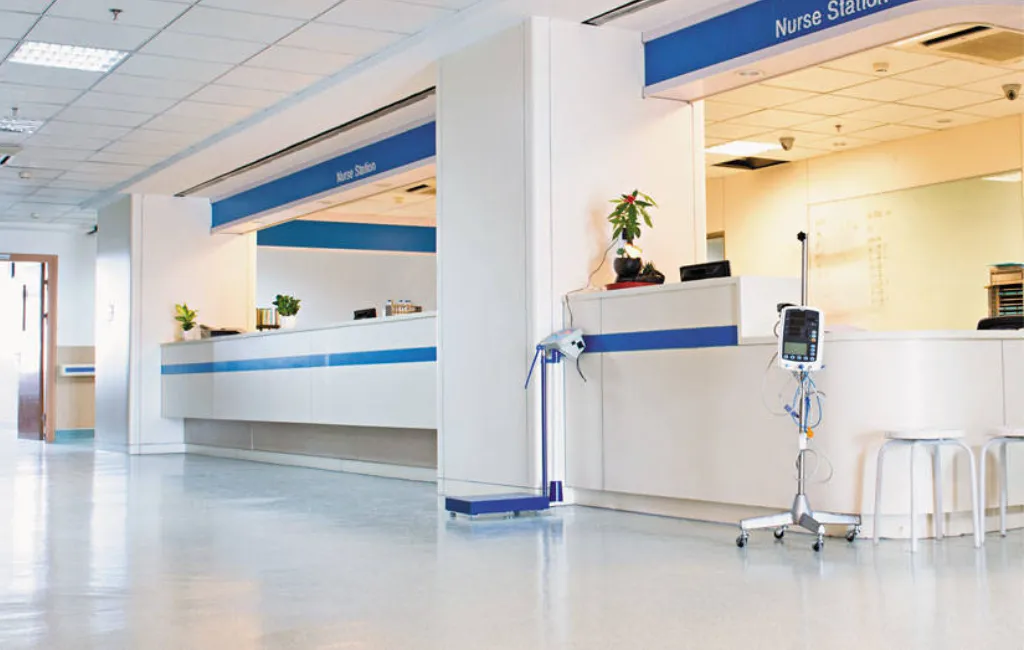
Why Choose Our Healthcare Facility Cleaning Services? Your Success, Our Guarantee
At Evergreen Cleaning Group, we specialize in cleaning services for Barrington medical practices. Our experienced team ensures your clinic remains safe and compliant with CDC guidelines and Illinois DPH regulations. Here’s why you should choose us:
- Customized Cleaning Plans
We create personalized cleaning schedules based on your clinic’s needs, ensuring optimal hygiene and patient safety. - Experienced Healthcare Cleaning Team
Our team is trained in hospital-grade disinfection and uses EPA-approved disinfectants for thorough cleaning. - Compliance with CDC & IDPH Guidelines
We follow all CDC and Illinois DPH regulations, helping your practice stay compliant and pass inspections. - Cross-Contamination Control
We use color-coded tools and microfiber cloths to prevent cross-contamination and protect your patients. - Audit & Documentation
We provide detailed cleaning logs and audits for transparency and easy reference during inspections.
Choose Evergreen Cleaning Group for a clean, safe, and compliant healthcare environment. Ready for a no-obligation facility assessment? Contact us today.
FAQ Section
Do small medical practices in Illinois follow the same cleaning rules as hospitals?
Yes, small medical practices in Illinois must follow similar infection control and cleaning standards, especially for high-touch surfaces and environmental cleaning, as per CDC guidelines.
What is the difference between sanitizing and hospital-grade disinfection?
Sanitizing reduces germs to safe levels, while hospital-grade disinfection kills pathogens, including viruses and bacteria, using EPA-approved disinfectants.
How long does an EPA-registered disinfectant need to stay wet (contact time)?
EPA-registered disinfectants need to stay wet for at least 5-10 minutes to be effective in killing harmful pathogens.
Are microfiber cloths really better than regular rags for medical cleaning?
Yes, microfiber cloths trap more dirt, bacteria, and viruses, preventing cross-contamination and ensuring a cleaner environment.
When should a clinic request terminal cleaning instead of daily cleaning?
Terminal cleaning is required after high-risk procedures, isolation room use, or discharge of patients with infectious diseases to thoroughly disinfect patient-contact areas.
Conclusion
Maintaining a clean, infection-free environment is crucial for Barrington medical practices to prevent healthcare-associated infections (HAIs), maintain patient safety, and ensure regulatory compliance. By following CDC guidelines for environmental cleaning, using EPA-registered disinfectants, and adopting cross-contamination prevention measures, you can safeguard both your patients and your clinic’s reputation.
Ready to implement CDC-aligned, HAI-reducing cleaning standards tailored for your Barrington practice? Contact Evergreen Cleaning Group for a no-obligation facility assessment today.